Spiderman Plank
Compound exercise, Body weightOverview
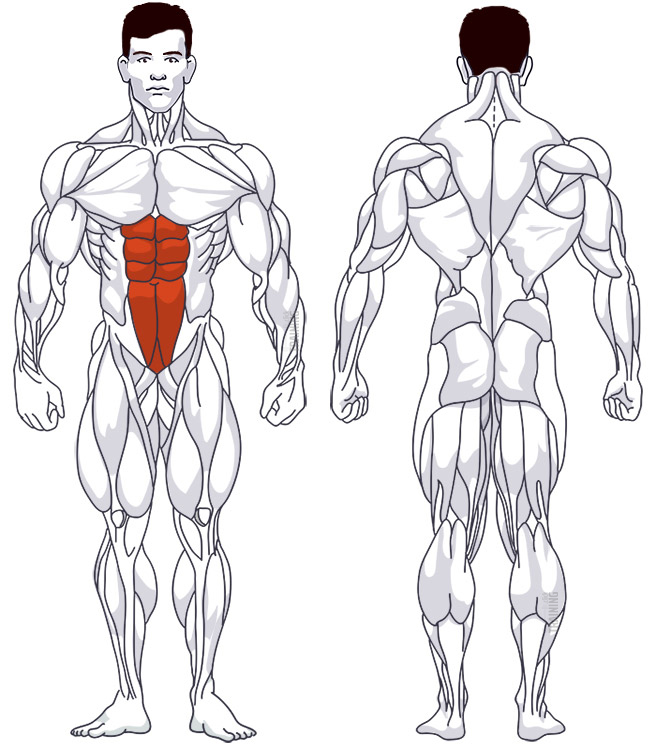
Main muscles
- Abdomen: Straight abdominal muscle
(Musculus rectus abdominis) - Abdomen: External oblique abdominal muscle
(Musculus obliquus externus abdominis) - Abdomen: Transverse abdominal muscle
(Musculus transversus abdominis)
Training plans
Spiderman Plank is a suitable substitute for similar exercises in Abs workout or as a supplement to various training plans.
Spiderman Plank: Basics and alternatives
Involved main muscle groups:
Spiderman Plank
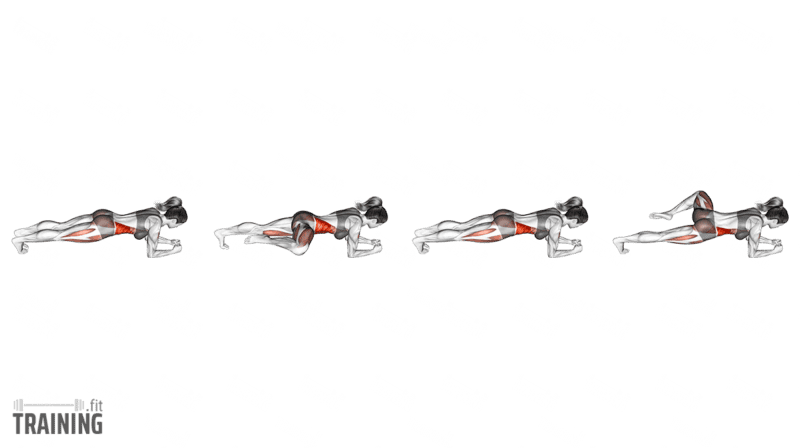
The Spiderman plank adds movement to the classic forearm plank. You’ll bring one knee out toward the elbow on the same side, return your foot and repeat with the other leg. Your abs help keep your trunk steady while your hip muscles move your leg.
If your hips drop when you lift a foot, start with a front plank. In Banded Mountain Climbers, you’re on your hands and pull your knees forward against a band. The Spiderman version needs space beside you, since your knee moves around the outside of your body.
Correct execution
The moving knee is only part of the challenge: you also have to keep the plank steady. A smaller knee movement helps while you learn to support yourself on three points.
Start in a regular forearm plank: elbows under your shoulders, legs extended behind you and your body supported on your forearms and toes. Keep your shoulders, hips and ankles roughly in line. Look down with your head in line with your back and breathe normally.
Lift one foot, bend your knee and guide it outward and forward toward the elbow on the same side. Leave enough space beside you for the knee to pass. Keep the moving foot close to the floor and the other leg straight behind you, with its toes planted.
Your knee doesn’t have to touch your elbow. Stop before your pelvis turns or your hips drop, then extend the leg back and place your toes on the floor.
New to the movement? Try it on your hands and knees first: guide one bent knee out to the side, with no need to reach an elbow, and bring it back. For the full exercise, use the forearm plank described above. If your hips start to sag as your leg moves, lower your knees and start again.
Video tutorial
Step-by-step instructions
Place your forearms on the floor with your elbows beneath your shoulders.
Extend your legs and support yourself on your toes.
Keep your shoulders, hips and ankles roughly in line. Look down with your head in line with your back.
Lift one foot and guide your bent knee outward and forward toward the elbow on the same side.
Stop before your pelvis turns or your hips drop. Your knee doesn’t need to touch your elbow.
Extend your leg back and place your toes on the floor. Check your plank position before changing sides.
Repeat with the other leg and keep alternating, then lower your knees to finish.
Common mistakes
Turning your whole pelvis to bring the knee farther forward takes you out of the steady plank position. Use a shorter reach and keep your other leg straight and firmly supported.
Don’t let your hips sink each time you lift a foot; put your foot down and reset before you continue. A quick sideways kick can also throw you off balance, so guide your bent knee forward and return it slowly.
Pulling your elbow back to meet your knee might feel natural, but that shifts your arm support and upper body. Keep both forearms in place, and move your knee only as far as you can while keeping that support steady.