Frog Stand
Compound exercise, Body weightOverview
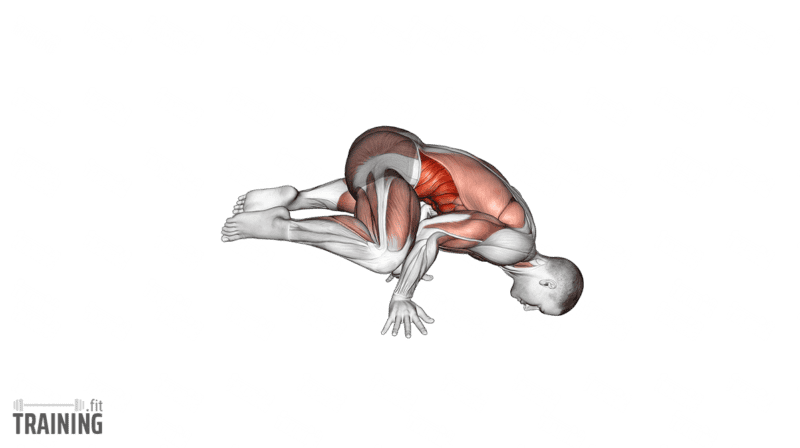
Main muscles
- Shoulder: Anterior deltoid muscle
(Musculus deltoideus, Pars clavicularis) - Triceps: Three-headed arm muscle
(Musculus triceps brachii) - Abdomen: Transverse abdominal muscle
(Musculus transversus abdominis)
Training plans
Frog Stand is a suitable substitute for similar exercises in Mobility and balance or as a supplement to various training plans.
Frog Stand: Basics and alternatives
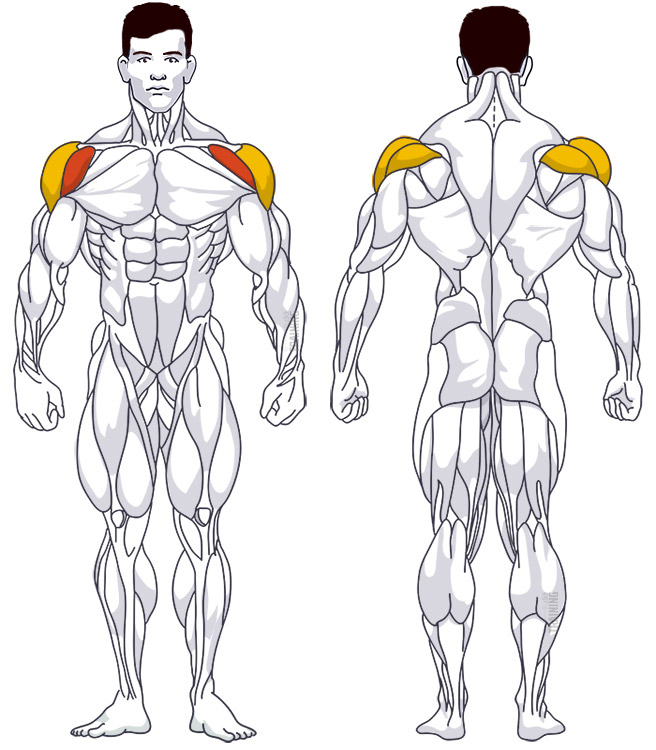
Involved main muscle groups:
Frog Stand
The frog stand is a fun way to practice balancing on your hands. You’ll rest your knees against your upper arms, keep your elbows bent and lift your feet only a little off the floor. Your shoulders, arms and abs hold you in position while you find your balance.
You may hear it called a frog planche, but supported knees and bent elbows distinguish it from a straight-arm planche. Push-Ups or a front plank let you practice supporting your weight with your feet down. The frog stand adds balancing on your hands with both feet lifted.
Correct execution
Use a firm, nonslip surface with plenty of space in front of you. Before you start, move your wrists gently and gradually put some weight through your palms so you get used to the position.
From a squat, place your hands roughly shoulder-width apart, a little ahead of your feet. Spread your fingers, bend your elbows and rest the insides of your knees against your upper arms, just above the elbows. Shift your weight forward slowly until you can lift one foot without pushing off the floor. Keep the other foot down for support at first.
Once you can balance with either foot lifted, try lifting both together. Keep your knees supported and draw your heels toward your butt. Your feet only need to clear the floor, so you can put them down again easily. Look slightly ahead of your hands and keep your head off the ground.
Keep your palms and the bases of your fingers in contact with the floor. You balance with small changes in finger pressure, so if you start tipping forward, press more firmly through your fingers. Breathe normally while you hold the position. To finish, shift back gently and place your toes on the floor.
Video tutorial
Step-by-step instructions
Squat on a nonslip surface. Place your hands roughly shoulder-width apart, slightly ahead of your feet, and spread your fingers.
Bend your elbows and rest the insides of your knees against your upper arms, just above the elbows.
Look slightly ahead of your hands and slowly shift your weight forward, keeping your head off the floor.
Lift one foot without jumping. Keep the other foot on the floor for support, then practice lifting that foot instead.
Once you can keep your balance, lift both feet a little off the floor. Keep your knees supported, draw your heels toward your butt and breathe as you hold the position.
Shift your weight back gently and place your toes on the floor before taking the weight off your hands.
Common mistakes
Trying to jump into the frog stand can tip you forward before you’ve found your balance. Shift your weight gradually and keep one foot down until you can lift it without pushing off.
If your elbows buckle or your knees slide off your upper arms, put your feet down and adjust your position. Do the same before changing the angle of your hands. Keep your elbows bent throughout the hold. Straightening your arms or stretching your legs back turns it into quite a different position, and it’s harder to keep your balance.