Kettlebell Thruster
Compound exercise, Free weightsOverview
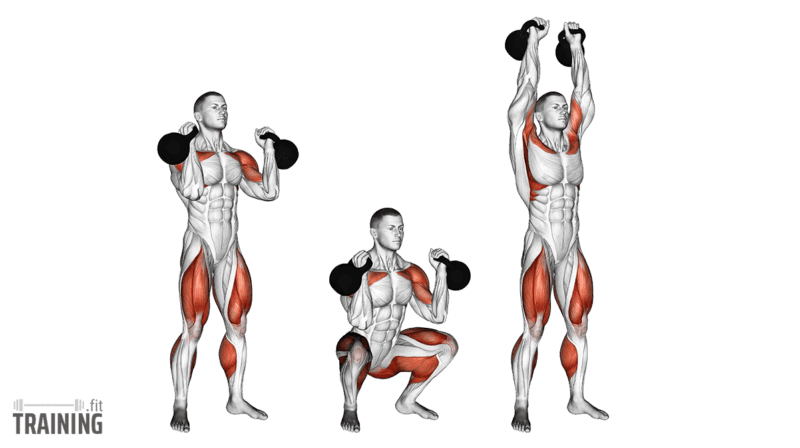
Main muscles
- Thigh: Quadriceps
(Musculus quadriceps femoris) - Buttocks: Large gluteus maximus
(Musculus gluteus maximus) - Shoulder: Anterior deltoid muscle
(Musculus deltoideus, Pars clavicularis) - Shoulder: Medial deltoid muscle
(Musculus deltoideus, Pars acromialis) - Triceps: Three-headed arm muscle
(Musculus triceps brachii) - Abdomen: Transverse abdominal muscle
(Musculus transversus abdominis)
Training plans
Kettlebell Thruster is a suitable substitute for similar exercises in Conditioning and full-body or as a supplement to various training plans.
Kettlebell Thruster: Basics and alternatives
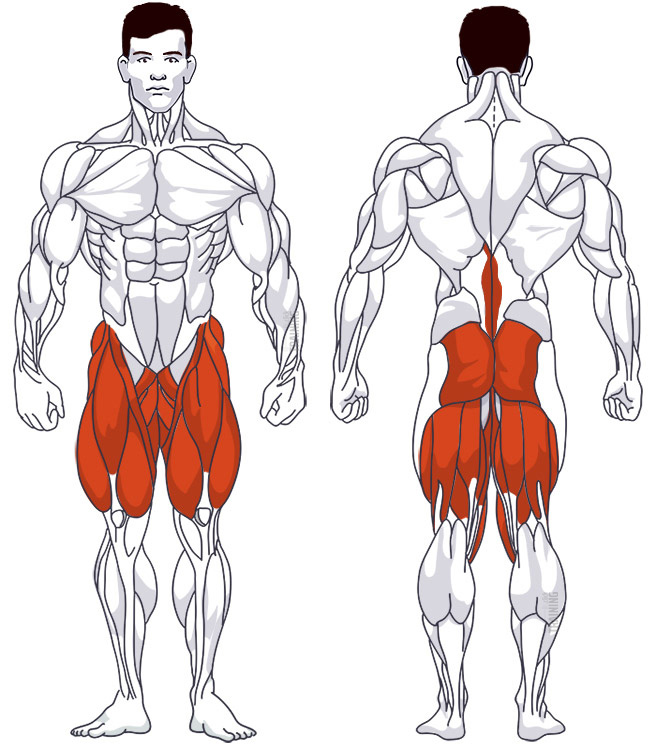
Involved main muscle groups:
Kettlebell Thruster
Kettlebell thrusters join a squat and overhead press in one flowing movement. You’ll hold two bells near your shoulders as you squat, then drive up powerfully and continue into the press. Your thighs and butt drive you upward while your shoulders and triceps finish the lift.
In the Dumbbell Front Squat, the weights stay at your shoulders throughout and aren’t pressed overhead. In the Push Press, a much shorter dip starts the overhead movement, and the Dumbbell Push Jerk adds a second knee bend to catch the weights. The thruster doesn’t need that extra dip: you go straight from the squat into the press. You can also do a goblet thruster with a single bell, but the version shown here uses one kettlebell in each hand.
Correct execution
Use two bells you can bring into the front rack and lower comfortably. Support them near your shoulders with your elbows close to your body and your wrists aligned. Choose a squat stance that gives your elbows room between your thighs. Rehearse the squat and overhead position separately before linking them.
Lower yourself with both feet flat and your knees pointing in the same direction as your toes. Squat only as low as you can while keeping the weights secure at your shoulders and your trunk steady. Then push up through your legs and continue into the press as your hips and knees extend, with no pause for a separate strict press. Finish standing tall with your arms extended and the bells above your shoulders. Bring both weights back to the rack before your next squat, and if lowering them pulls you into an uncontrolled descent, stop and reset.
At the bottom, the bells should clear your thighs and your elbows shouldn’t rest on your knees. Keep the handles secure in your palms from rack to press; there’s no need to switch to a barbell-style grip overhead. Let each bell follow its own path, and breathe out as your legs drive you into the press.
Video tutorial
Step-by-step instructions
Bring two manageable kettlebells into a secure front rack and set a comfortable squat stance.
Brace your trunk and lower into a controlled squat with the bells near your shoulders.
Drive upward through your legs while keeping the rack steady.
Continue into the overhead press as your hips and knees extend.
Finish upright with both arms extended, without bending your knees again to catch the weights.
Lower the bells back to the rack, then repeat with control or bring them down to the floor.
Common mistakes
Pressing too early can pull the bells away from their support before your legs have completed the drive. Keep them close during the squat and let the upward movement carry into the press.
Don’t lean back to finish the press or let one bell drift far ahead of the other. Use a lighter pair if you can’t control both bells. Lower both securely to your shoulders before squatting again; a rushed return can pull you into the next descent.