Safety squat bar
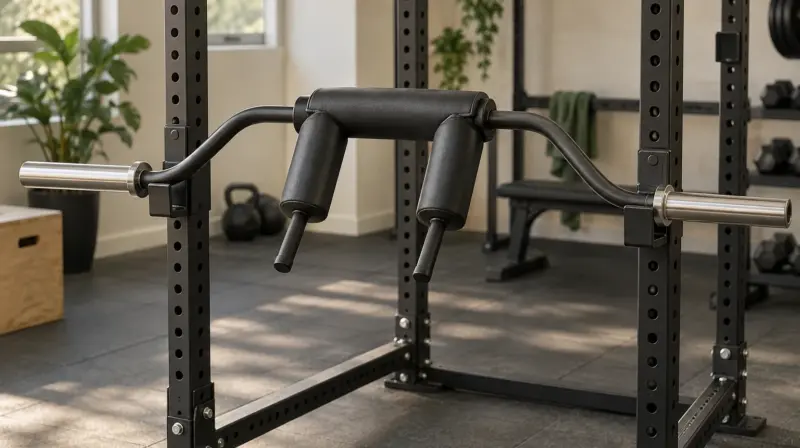
A safety squat bar is a squat bar with a padded yoke around the upper back and forward-facing handles. Its shaped sleeves and padding distinguish it from a straight barbell.
Padding and handle designs
The padded yoke is the part you’ll notice immediately. It should sit securely across your upper back and shoulders without hard edges pressing through. Compare the space between the shoulder pads as well as their thickness: a bulky pad isn’t much help if the shape doesn’t fit you.
Some bars have separate pads; others use a single shaped cushion. Handles may be short, long or removable. Check that you can reach them with relaxed shoulders and that any detachable parts lock firmly. A wipe-clean cover and available replacement padding are useful for equipment that gets regular use.
Bar shape and balance
The bend that offsets the plate sleeves is often called the camber. Its shape and angle vary, so two safety squat bars can feel different even with the same plates attached. Adjustable versions may offer more than one setting; use the instructions for that model rather than treating all positions alike.
The forward handles mean you don’t have to reach back to hold a straight bar across your shoulders. That’s a practical difference in the grip position, but it isn’t a guarantee of pain-free squats. Start with a manageable load when changing bars, and include the actual empty bar weight in your training record.
Will it fit your rack?
Measure the rack width and compare it with the bar’s usable racking section. The padding, bends and sleeve shoulders must leave room for secure contact with the J-hooks and safeties. Also check plate and collar compatibility, usable sleeve length and the manufacturer’s load rating.
In a small room, leave clearance to slide plates on and off both sides. The projecting handles can make storage awkward, so check the stored dimensions as well as the overall bar length before buying.
Positioning the bar
Set the bar in a suitable rack and place the padded section on the upper back as intended for that model. Hold the handles to guide the bar without pulling them sharply downward. The exact shape and balance differ between manufacturers.
Use correctly positioned rack safeties and secure the weight plates. The name does not mean that every squat performed with the bar is automatically safe; the load, setup and controlled movement still matter.
Working out with safety squat bar
You can perform the following exercise with safety squat bar.
| Exercise | Main muscle group | Difficulty | Type of training |
| Safety Bar Squat | Thigh training |
Hard |
Compound exercise |