Side Plank with Knee Tuck
Compound exercise, Body weightOverview
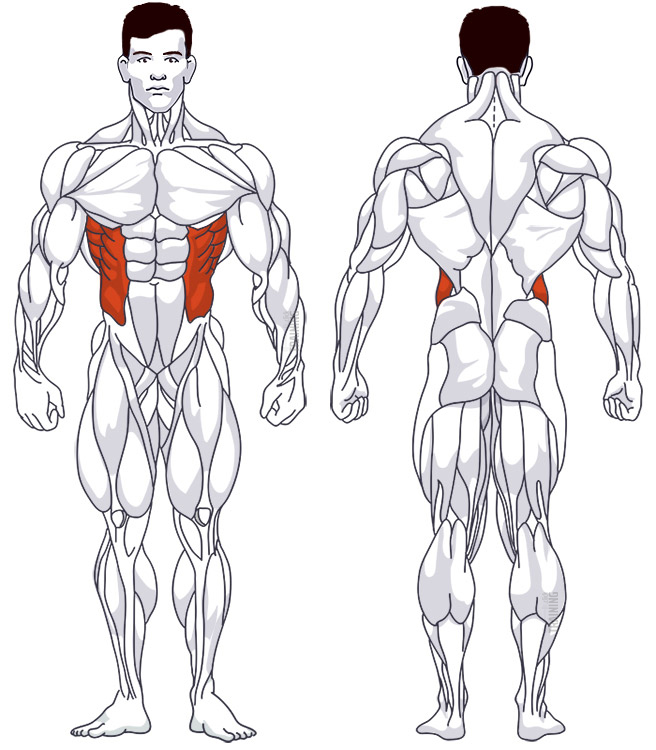
Main muscles
- Abdomen: External oblique abdominal muscle
(Musculus obliquus externus abdominis) - Abdomen: Transverse abdominal muscle
(Musculus transversus abdominis) - Buttocks: Gluteus medius muscle
(Musculus gluteus medius) - Thigh: Straight muscle of the thigh
(Musculus rectus femoris)
Training plans
Side Plank with Knee Tuck is a suitable substitute for similar exercises in Abs workout or as a supplement to various training plans.
Side Plank with Knee Tuck: Basics and alternatives
Involved main muscle groups:
Side Plank with Knee Tuck
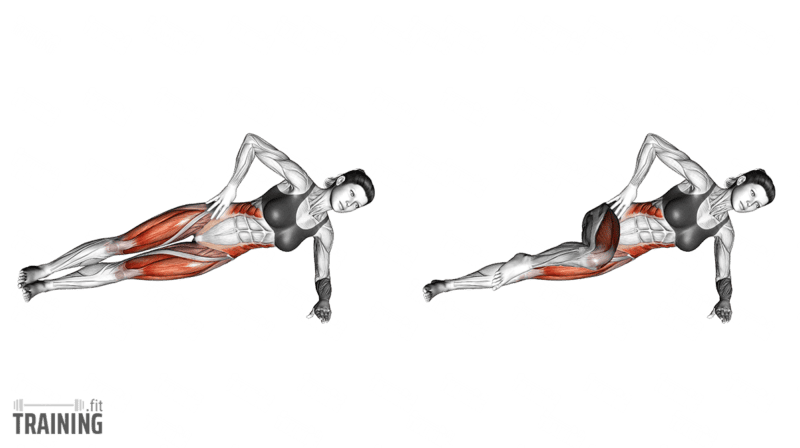
A knee tuck adds movement to the classic side plank. You’ll balance on your bottom forearm and foot as you draw your top knee toward your chest and return it. Your obliques and other core muscles keep you steady, while your hip muscles support your pelvis and move your leg.
If holding a standard side plank is already difficult, practice that first. Spiderman planks add a knee movement from a front plank. For a side-plank variation that moves your upper arm instead, you can try the side-plank rear fly with a dumbbell.
Correct execution
The knee tuck shifts your balance while you hold the side plank. A smaller tuck lets you practice keeping your pelvis lifted instead of turning the whole body toward the floor.
To start on your left side, place your left elbow beneath your shoulder and your forearm on the mat. Extend your legs, stack your right foot on your left and lift your hips. Your left forearm and the outside edge of your left foot support your body. Rest your right hand on your hip and keep your chest facing forward. You can also support yourself on your straight left arm, with your hand beneath your shoulder, as in the illustration.
Lift your right foot slightly, find your balance, then draw your right knee toward your chest. Keep your left leg straight and your hips lifted. Stop before your upper body turns toward the floor; your knee doesn’t have to touch your chest or elbow.
Straighten your right leg back into line with your body and gently rest your right foot on your left. The leg stops there; don’t swing it behind you before the next repetition. Keep breathing as you move, then lower your hips before changing sides.
If you can’t lift the upper foot without losing your position, put it down and practice the static side plank first. A smaller knee movement only helps if you can keep your supporting position steady.
Video tutorial
Step-by-step instructions
Lie on your left side. Place your left elbow beneath your shoulder and rest your forearm on the mat.
Extend your legs and stack your right foot on your left. Lift your hips, supporting yourself on your left forearm and the outside edge of your left foot.
Place your right hand on your hip. Lift your right foot a little and find your balance.
Draw your right knee toward your chest without lowering your hips or turning your upper body toward the floor.
Straighten your right leg back into line with your body and rest your right foot gently on your left. Repeat with control, then lower your hips and change sides.
Common mistakes
Make sure only your top leg moves, while your supporting forearm and foot stay on the floor throughout the repetition. Practice the starting hold before lifting a foot.
Pulling your knee farther forward doesn’t help if your hips sink or your chest turns downward, so stop a little earlier and keep your body steady. Sinking into your supporting shoulder and holding your breath are other common slips: stay lifted through that shoulder and keep breathing. If you can no longer maintain the position, lower your hips and start again.